
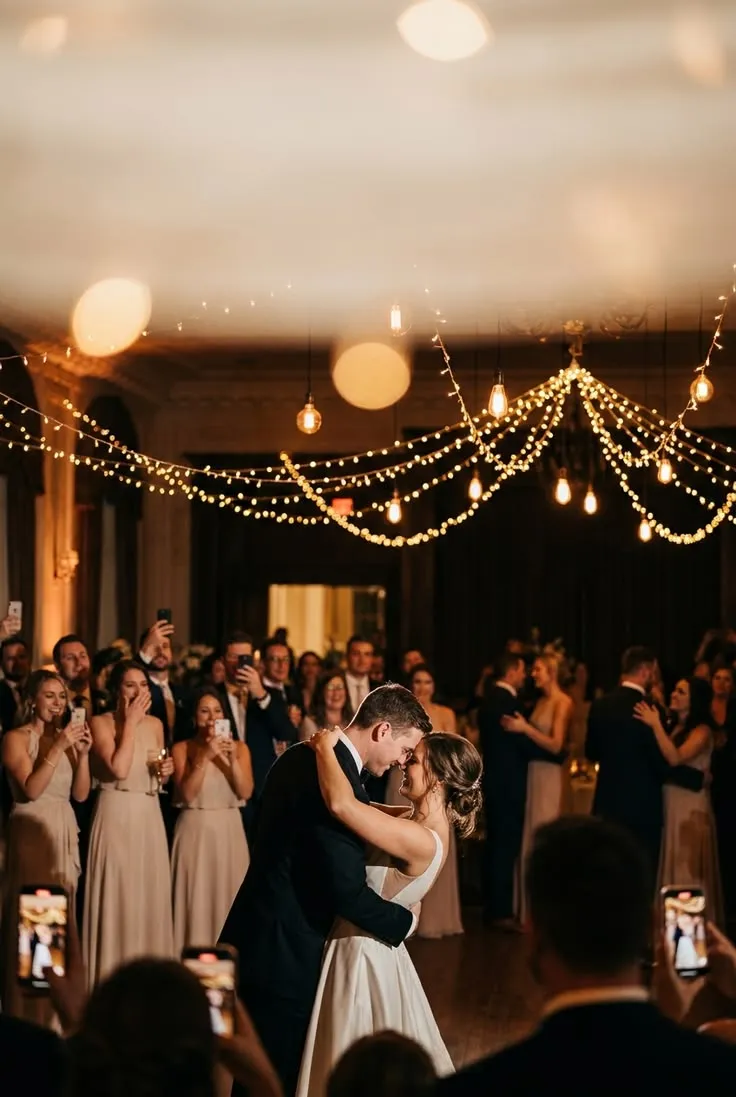

Wedding receptions change dramatically once daylight fades. A room that looked bright during an afternoon venue tour may feel completely different after candles are lit, overhead fixtures are dimmed, and a DJ introduces colored lights. These choices affect more than décor. They shape skin tones, background atmosphere, movement, and the character of evening photographs. Couples do not need to become lighting experts, but a few thoughtful decisions can help the reception look intentional both in person and in the final gallery.
Start With the Mood You Want
Before choosing fixtures or decorative lighting, decide how the reception should feel. A candlelit dinner creates a different atmosphere from a bright garden party or a high-energy dance floor. The best lighting plan supports that mood instead of trying to make every corner equally bright.
Warm lamps, candles, and soft overhead lighting can make dinner feel intimate. Cleaner, brighter light may suit a modern venue with minimal décor. Think about how the room will feel after sunset, not only how it appears during a daytime walkthrough.
See the Venue at Reception Time
If possible, visit the reception space around the same time of day that it will be used. This can reveal details that are easy to miss on a morning tour. Windows may become dark reflective surfaces, corners may lose visibility, and architectural features that looked prominent in daylight may nearly disappear.
Couples comparing asheville wedding photographers can also ask how a photographer handles dark venues, mixed lighting, and changing reception conditions. Professional flash can preserve important moments, but the room itself still contributes to the look of the images.
Be Careful With Strong Colored Uplighting
Colored uplighting can transform a plain room, but intense colors can also affect faces, clothing, flowers, and food. Deep purple, blue, red, or green light may look dramatic to the eye while creating an overwhelming color cast in photographs.
Couples who enjoy colored lighting can use it on walls, architectural features, or the dance floor while keeping key areas such as the head table, cake, and speaking locations more neutral. This preserves the atmosphere without allowing one color to dominate every reception image.
Think About Speeches Before Dinner
Speeches are emotionally important, yet lighting around the speaker can be an afterthought. Someone may stand in a dark corner, directly beneath a harsh ceiling light, or with a bright DJ fixture behind them.
An experienced nc wedding photographer may be able to compensate technically, but thoughtful positioning can still improve the scene. Ask where speeches will happen, whether the speaker will use a microphone, and what light will fall on both the speaker and the couple.
A small adjustment to the speaking location can make reactions easier for guests to see and photographs easier to read.
Let the Dance Floor Change the Energy
Dance-floor photographs do not need to look like dinner photographs. Once formal events are finished, movement, contrast, flash, and colored DJ lighting can become part of the visual language.
This is one area where energetic lighting works well. Beams, reflections, haze, and rapid color changes can reinforce the feeling of celebration. Couples who want lively reception images should leave enough room for guests to move and avoid crowding the dance floor with unnecessary furniture.
Use Candles With Practicality in Mind
Candles can add warmth and depth, especially on dinner tables, but venue rules and safety requirements matter. Some properties restrict open flames or require enclosed candles.
Battery-operated alternatives can still create a warm appearance when chosen carefully. Whatever the method, repetition across tables often has more visual impact than a few isolated sources. Avoid placing tall candles where they block guests’ faces during conversation.
Do Not Forget the Final Hour
Reception lighting often changes again late in the evening. Decorative fixtures may be switched off, staff may begin adjusting the room, or an exit may happen outside in near darkness.
If a planned final moment matters, discuss where it will occur and what lighting will remain available. A little preparation can prevent a memorable ending from happening in a visually confusing space.
Conclusion
Reception lighting is part décor, part atmosphere, and part practical planning. Couples do not need to design the room specifically for the camera, but they should understand how it will look once daylight disappears. Balanced color, thoughtful speech locations, intentional dinner lighting, and a dance floor that can embrace more dramatic effects all contribute to a stronger visual story. When lighting choices support the actual mood of the celebration, the photographs can preserve not only what the reception looked like, but also the energy and intimacy that made the evening memorable.